
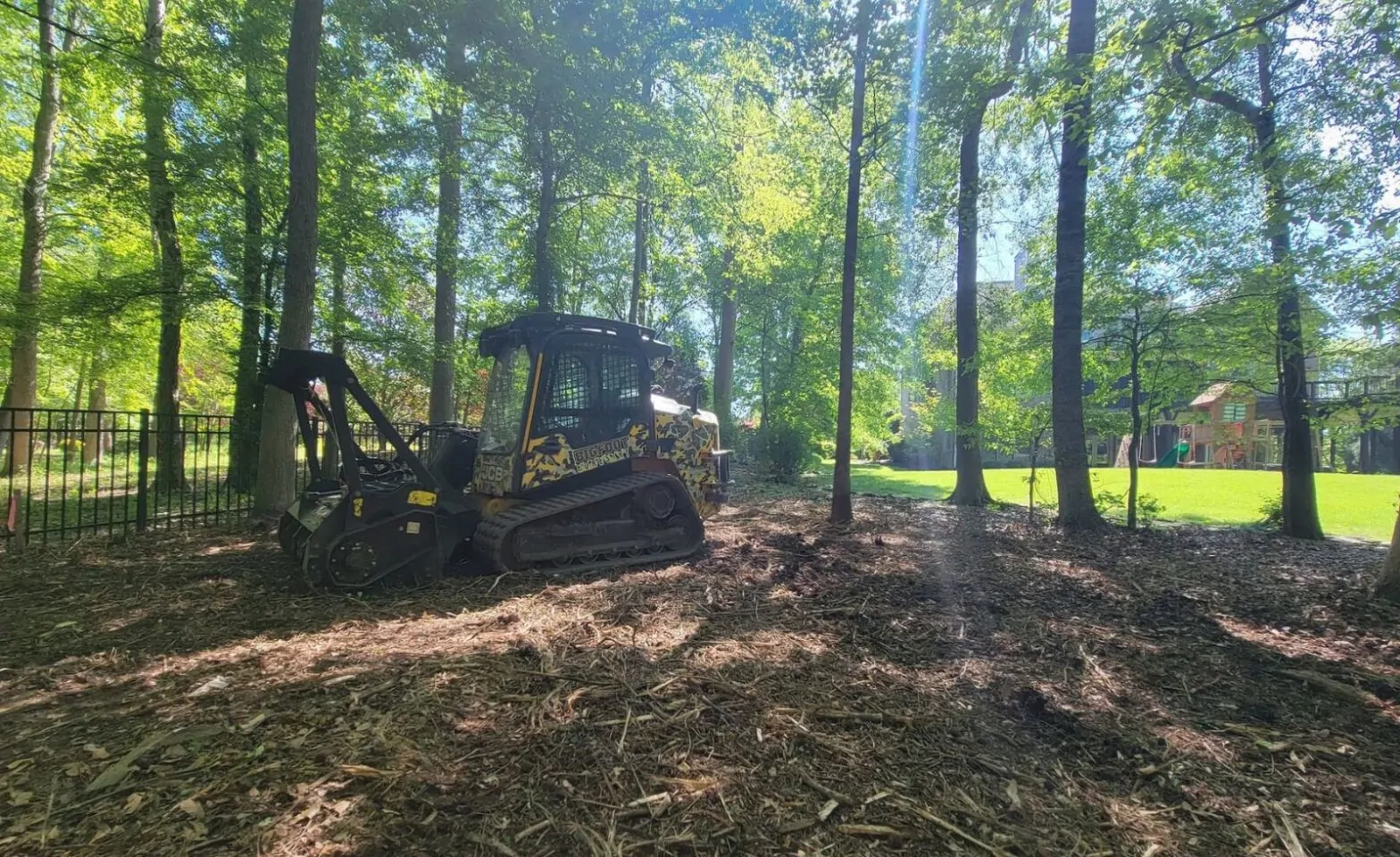
Forestry mulching and traditional land clearing suit different project goals and site conditions. Forestry mulching selectively cuts and processes vegetation on-site, leaving behind a layer of nutrient-rich mulch. Traditional land clearing takes a more comprehensive approach, removing vegetation and debris when a property needs to be fully cleared and prepared for construction.
At Bigfoot Forestry, we help homeowners find the most efficient solution for their acreage. If you are unsure which service fits your vision, read the blog post below, or consider contacting Bigfoot Forestry!
Forestry Mulching vs. Traditional Land Clearing: What Is the Difference?
Both forestry mulching and traditional land clearing aim to create functional space. However, the two methods rely on different equipment, workflows, and debris-management strategies.
How Forestry Mulching Works
Forestry mulching uses specialized machinery equipped to cut, shred, and grind brush, vines, and trees on-site into fine organic material. This selective approach lets operators thin underbrush while preserving mature trees. The process causes minimal soil disruption, leaving root systems intact, so there is no need to haul away debris.
Remaining mulch protects exposed soil, suppresses weeds, retains moisture, and prevents erosion.
How Traditional Land Clearing Works
Traditional land clearing removes vegetation comprehensively using bulldozers, excavators, and backhoes to rip out trees, dig up stumps, and strip ground cover in preparation for a new land use. Because everything is uprooted, this process generates massive volumes of debris that must be burned, buried on-site where permitted, or loaded into trucks for transport off the property.
Haul-away availability varies by Bigfoot Forestry location.
Method Comparison Breakdown
To understand whether forestry mulching or land clearing is the better option, it helps to compare the two.
- Primary Purpose: Forestry mulching excels at selective thinning and brush management, whereas traditional land clearing provides full site preparation for building pads and infrastructure.
- Vegetation Management: Forestry mulching selectively targets unwanted brush and undergrowth. Traditional clearing comprehensively removes all trees, brush, and underground root systems.
- Soil Disturbance: Forestry mulching causes minimal disturbance because roots stay in place to anchor the soil. Traditional clearing causes significant disturbance through topsoil grading and root grubbing.
- Debris & Mulch Handling: Forestry mulching processes vegetation directly on-site into protective mulch. Traditional clearing requires piling, burning, or hauling debris off-site.
- Typical Applications: Forestry mulching is ideal for trail creation, pasture reclamation, and aesthetics. Traditional clearing is required for house foundations, driveways, and utility installation.
- Cost Considerations: Forestry mulching requires less labor and has no disposal fees. Traditional clearing costs more because it requires multiple machines, fuel, and potential haul fees.
The best choice depends on your goals.
When Is Forestry Mulching the Better Choice?
Homeowners may search for land clearing when what they actually need is forestry mulching. For most non-construction goals, forestry mulching offers a smarter, faster route.
Selective Vegetation Management
Forestry mulching reclaims overgrown areas, manages brush, and improves property usability or appearance without fully clearing the site. It clears out choking briars and underbrush while preserving shade trees, opening up sightlines, or creating walking trails.
Less Soil Disturbance
Processing vegetation in place reduces the need for material handling and haul-away. As fresh mulch breaks down, it returns valuable nutrients to the soil.
When Traditional Clearing Makes Sense
Major construction, like house foundations, driveways, or septic lines, requires complete root and stump excavation to prevent settling. The appropriate method depends on the property’s condition and intended use.
Costs, Timelines, and Environmental Impact
Forestry mulching costs and project timelines depend on vegetation density, terrain, property size, accessibility, and scope. Because it typically uses one machine to cut and process vegetation on-site, forestry mulching can reduce hauling and disposal costs while leaving the underlying soil structure intact and providing immediate erosion control. Depending on the property and project goals, combining methods may also be effective, such as using traditional land clearing for a home’s building footprint and forestry mulching for the surrounding acreage. A professional property evaluation can help determine the most efficient approach for your site.
Frequently Asked Questions
Is forestry mulching cheaper than land clearing?
In most non-construction cases, yes. It requires fewer machines and less labor, and it eliminates haul-away fees.
Is forestry mulching environmentally friendly?
Yes. It prevents erosion, retains soil moisture, avoids debris burning, and eliminates soil compaction.
How do I know which method I need?
If you are building a structure, you need traditional clearing. For property maintenance and trail creation, forestry mulching is ideal.
Talk to Bigfoot Forestry
Not sure which service you need? Contact Bigfoot Forestry today for more information!